I've been struggling with a part of my chapter concerning injury science. I've written about the history, theories and concepts of injury science, and I'm trying to apply the theories and concepts to activities associated with preparing a person to survive a violent encounter ('Survival Activities'). It has such potential to shine a very bright light on Survival Activities that I do not want to prejudice its potential by a poor application the first time it is introduced to Survival Activities.
This morning I read: A world of illusion: Coping with the reality of violence. It is an essay concerning violence and what we can do. The author asks, 'What can we do?' He suggests, 'The best we can do is take those measures that are prudent,' and 'The best you can do is take whatever measures are reasonable in your particular environment.' Injury science offers ways and means of operationalising this advice.
It takes a chapter to get to this point, but we'll start at this point in this blog - Haddon's Matrix. William Haddon provided a matrix that is designed to analyse any injury, harm or damage event. It takes all the factors that contribute to injury, harm or damage into account and over the time frame associated with said injury, harm or damage. The factors and phases are cross tabulated to form a nine cell matrix.
The factors are based on epidemiology. They are host (person injured), vector or vehicle (animate or inanimate object inflicting the injury), and environment (physical, social, cultural, etc). The phases are before the interaction of host and vector (before assault), during interaction (assault), and after interaction (after assault).
Injury science is about prevention and control. The control aspect refers to minimising injury and the effects of injury should prevention measures fail. The simple prevention model abandons you if prevention measures fail - as do most Survival Activities teachings.
This matrix is an analytical tool and a strategy brainstorming tool. It aids us in analysing an injury event (act of violence). It aids us in analysing the risk of an injury event. It provides multiple intervention points to prevent or control injury in the case of a violent event. The traditional martial arts model tends to focus on the host-vector cell alone. There are eight more cells where interventions can be introduced to prevent or control injuries arising from a violent event.
The Haddon Matrix forces you to think about all the factors and all the phases in an injury/violent event. It then encourages you to consider interventions at the different stages and with the different factors that contribute to the event. The author of the abovementioned post quite rightly referred to environment. However, it is the interactions between the host (victim or potential victim), vector (aggressor), and the environment that define the injury event. All three and their interaction have to be considered. Typically, this is poorly done in the martial arts and self defence courses.
This topic is far too detailed and large for a blog post. This post is designed to (a) inform the reader there is a tool that assists in developing strategies to counter the effects of violence, (b) introduce the reader to the Haddon Matrix concept, and (c) interest the reader in my work.
Tuesday, November 13, 2012
Saturday, November 10, 2012
Duty of Care
Injury and pain are two phenomena that are at the very heart of all fighting methods. They are a major feature in the definition of offensive and defensive aggression and violence. Explicit explanation of them are also noticeably absent in the literature associated with preparing a person to survive a violent encounter.
I'm currently writing a chapter on injury referencing the theories and concepts of injury science. Injury science is a relatively new science that studies injury and the causes of injury. It is also a science that has hitherto not been explicitly referred to within the literature associated with preparing a person to survive a violent encounter.
The following is one section of that chapter which deals with duty of care. Duty of care is a concept that is often referred to by lawyers and non-lawyers alike but which many non-lawyers have never actually studied. Lawyers only know it from a legal standpoint, not from a practical standpoint.
Duty of Care
The modern concept of duty of care was first defined by Lord Atkin in the famous landmark case of Donoghue v. Stevenson. This case was an appeal to the House of Lords England by Mrs Donoghue who became ill after drinking a bottle of ginger beer that was contaminated by a decomposing snail. She subsequently sued Stevenson, the manufacturer. Finding in favour of Mrs Donoghue, Lord Atkin said: 'The rule that you are to love your neighbour becomes in law, you must not injure your neighbour; ... You must take reasonable care to avoid acts or omissions which you can reasonably foresee would be likely to injure your neighbour.'
How does a person or organisation discharge their duty of care? By taking reasonable care to avoid acts or omissions that would likely injure a person to whom a duty of care is owed and which are reasonably foreseeable. The Donoghue v Stevenson case focused on who the 'neighbour' is, who a duty of care is owed to, however, let's get back to core of the problem – injury and the cause of injury.
If you want to avoid injuring a person, surely it behoves you to first understand what causes an injury. Injury science not only provides the means to understand what causes an injury, it provides means and ways of understanding and identifying means and ways of preventing and controlling injury. In this way, the theories and concepts of injury science have a great deal to contribute to the discharging of a duty of care.
The Japan Judo Accident Victims Association (JJAVA) was established in response to 108 student (aged between 12 and 18) fatalities in Japanese junior and senior high schools from 1983 to 2009 as a result of judo accidents. Their mission is to 'support victims and find ways to reduce death and serious injury among students in Japan through introduction of effective safety measures as standard practice in the sport of judo.' The first thing that injury science would offer in support of the JJAVA mission is: injuries are not accidents.
Sommers explains that 'the term "accident" denotes an unforeseen, unexpected event that is the result of chance, fate or destiny. It is also used to describe human error or mistake, which thereby excludes the person from the consequence of injury' (emphasis added. If the above fatalities are the result of an accident, then by definition they are unforeseen and there is no breach of a duty of care. There would be no legal obligation for the instructors or school authorities to take reasonable care to avoid these injuries because they are unforeseen 'accidents.'
When arguing for the need to discontinue the use of the word 'accident' when referring to unintentional injury events, Langley refers to a survey of women whose children had been injured. The results showed that many of them had not taken any action to prevent a reoccurrence of the event resulting in injury. The findings suggested this was not because such events were perceived as being too difficult to control, or action was inappropriate, or that the event was useful education for the child. Rather, many mothers saw the incidents as something which by definition could not be prevented – an 'accident.'
'Accidents will happen' – this was a post on an internet forum by an internationally renowned (but unnamed here) martial arts authority discussing the JJAVA experience. What impetus is there to find ways to reduce death and serious injury among students if the fatalities and serious injuries are the result of accidents, and accidents will happen? By definition they are unpredictable and unpreventable.
Sommers suggests that a better understanding of the nature of injury in the past few years has led to a reconceptualisation of injury as a largely preventable event. The JJAVA mission of preventing future fatalities and serious injuries is supported by the injury science mantra that injuries are not accidents. The JJAVA mission would be further supported by reference to injury science theory. The duty of care espoused by Lord Atkin only refers to preventing injuries. Injury science goes beyond mere prevention. Injury science offers solutions to prevent and control injury should injury occur. Injury science offers solutions that limit the exposure to legal liability associated with a breach of duty of care. Injury science goes beyond the mere legal to our moral and ethical duty to prevent and control injury generally.
******
The above is a first draft. After reading it in this post, I am struck with the emphasis that duty of care is NOT just a legal duty. It is not something that is dealt with by purchasing insurance. It is a moral and ethical duty before it is a legal duty. It is not a risk that is transferred to a third party via insurance; it is a risk you address youself in order to discharge your moral and ethical duty of care. And how can you address your duty of care if you don't know what causes an injury?
Secondly, surely your public liability insurance premiums should be reduced if you can demonstrate your comprehensive efforts at discharging your duty of care. Much the way health insurance premiums should be reduced if you do not smoke. By definition, injury science offers the means and ways to address injury risk issues, which the insurance companies could adopt to reduce premiums for those who utilise these ways and means.
Thirdly, injury science's mantra, injuries are not accidents, makes a mokery of coroner's 'accidental death' rulings. There is no accidental death. One-punch deaths, which have been a subject of previous posts on this blogs, are not accidental deaths. The legal system defined them as so up until, in Western Australia, specific legislation assigned responsibility for one-punch deaths to the aggressor who initiated the process that led to the death. The legal system is slowly catching up with injury science.
Lastly, while locating an image to insert at the top of this post, I noticed that a number of martial arts organisations offer services to the public, particularly the corporate public, that are designed to assist in discharging their duty of care. Even the school I previously taught at offers these services. Given Lord Atkin's explanation of duty of care, surely it compromises the ability to assist in discharging a duty of care if one is unaware of the causes of injury. To put it another way, surely it enhances the ability to assist in discharging a duty of care if one is aware of the causes of injury.
My book will be the first in the literature associated with preparing a person to survive a violent encounter that will address this issue directly.
I'm currently writing a chapter on injury referencing the theories and concepts of injury science. Injury science is a relatively new science that studies injury and the causes of injury. It is also a science that has hitherto not been explicitly referred to within the literature associated with preparing a person to survive a violent encounter.
The following is one section of that chapter which deals with duty of care. Duty of care is a concept that is often referred to by lawyers and non-lawyers alike but which many non-lawyers have never actually studied. Lawyers only know it from a legal standpoint, not from a practical standpoint.
Duty of Care
The modern concept of duty of care was first defined by Lord Atkin in the famous landmark case of Donoghue v. Stevenson. This case was an appeal to the House of Lords England by Mrs Donoghue who became ill after drinking a bottle of ginger beer that was contaminated by a decomposing snail. She subsequently sued Stevenson, the manufacturer. Finding in favour of Mrs Donoghue, Lord Atkin said: 'The rule that you are to love your neighbour becomes in law, you must not injure your neighbour; ... You must take reasonable care to avoid acts or omissions which you can reasonably foresee would be likely to injure your neighbour.'
How does a person or organisation discharge their duty of care? By taking reasonable care to avoid acts or omissions that would likely injure a person to whom a duty of care is owed and which are reasonably foreseeable. The Donoghue v Stevenson case focused on who the 'neighbour' is, who a duty of care is owed to, however, let's get back to core of the problem – injury and the cause of injury.
If you want to avoid injuring a person, surely it behoves you to first understand what causes an injury. Injury science not only provides the means to understand what causes an injury, it provides means and ways of understanding and identifying means and ways of preventing and controlling injury. In this way, the theories and concepts of injury science have a great deal to contribute to the discharging of a duty of care.
The Japan Judo Accident Victims Association (JJAVA) was established in response to 108 student (aged between 12 and 18) fatalities in Japanese junior and senior high schools from 1983 to 2009 as a result of judo accidents. Their mission is to 'support victims and find ways to reduce death and serious injury among students in Japan through introduction of effective safety measures as standard practice in the sport of judo.' The first thing that injury science would offer in support of the JJAVA mission is: injuries are not accidents.
Sommers explains that 'the term "accident" denotes an unforeseen, unexpected event that is the result of chance, fate or destiny. It is also used to describe human error or mistake, which thereby excludes the person from the consequence of injury' (emphasis added. If the above fatalities are the result of an accident, then by definition they are unforeseen and there is no breach of a duty of care. There would be no legal obligation for the instructors or school authorities to take reasonable care to avoid these injuries because they are unforeseen 'accidents.'
When arguing for the need to discontinue the use of the word 'accident' when referring to unintentional injury events, Langley refers to a survey of women whose children had been injured. The results showed that many of them had not taken any action to prevent a reoccurrence of the event resulting in injury. The findings suggested this was not because such events were perceived as being too difficult to control, or action was inappropriate, or that the event was useful education for the child. Rather, many mothers saw the incidents as something which by definition could not be prevented – an 'accident.'
'Accidents will happen' – this was a post on an internet forum by an internationally renowned (but unnamed here) martial arts authority discussing the JJAVA experience. What impetus is there to find ways to reduce death and serious injury among students if the fatalities and serious injuries are the result of accidents, and accidents will happen? By definition they are unpredictable and unpreventable.
Sommers suggests that a better understanding of the nature of injury in the past few years has led to a reconceptualisation of injury as a largely preventable event. The JJAVA mission of preventing future fatalities and serious injuries is supported by the injury science mantra that injuries are not accidents. The JJAVA mission would be further supported by reference to injury science theory. The duty of care espoused by Lord Atkin only refers to preventing injuries. Injury science goes beyond mere prevention. Injury science offers solutions to prevent and control injury should injury occur. Injury science offers solutions that limit the exposure to legal liability associated with a breach of duty of care. Injury science goes beyond the mere legal to our moral and ethical duty to prevent and control injury generally.
******
The above is a first draft. After reading it in this post, I am struck with the emphasis that duty of care is NOT just a legal duty. It is not something that is dealt with by purchasing insurance. It is a moral and ethical duty before it is a legal duty. It is not a risk that is transferred to a third party via insurance; it is a risk you address youself in order to discharge your moral and ethical duty of care. And how can you address your duty of care if you don't know what causes an injury?
Secondly, surely your public liability insurance premiums should be reduced if you can demonstrate your comprehensive efforts at discharging your duty of care. Much the way health insurance premiums should be reduced if you do not smoke. By definition, injury science offers the means and ways to address injury risk issues, which the insurance companies could adopt to reduce premiums for those who utilise these ways and means.
Thirdly, injury science's mantra, injuries are not accidents, makes a mokery of coroner's 'accidental death' rulings. There is no accidental death. One-punch deaths, which have been a subject of previous posts on this blogs, are not accidental deaths. The legal system defined them as so up until, in Western Australia, specific legislation assigned responsibility for one-punch deaths to the aggressor who initiated the process that led to the death. The legal system is slowly catching up with injury science.
Lastly, while locating an image to insert at the top of this post, I noticed that a number of martial arts organisations offer services to the public, particularly the corporate public, that are designed to assist in discharging their duty of care. Even the school I previously taught at offers these services. Given Lord Atkin's explanation of duty of care, surely it compromises the ability to assist in discharging a duty of care if one is unaware of the causes of injury. To put it another way, surely it enhances the ability to assist in discharging a duty of care if one is aware of the causes of injury.
My book will be the first in the literature associated with preparing a person to survive a violent encounter that will address this issue directly.
Thursday, November 1, 2012
Plan a Violence Prevention Program
There is a saying about writing a book: it's like drinking an ocean and pissing a cup. That is so very true in my experience. I have drunk the ocean, and pissed a barrel. I'm now in the process of drinking the barrel in the hope of pissing a cup. This is a rather crude way of saying I'm in the redrafting process.
In Hostility and Aggression, Zillmann defines aggressive behaviour as being 'any and every activity by which a person seeks to inflict bodily damage or physical pain upon a person who is motivated to avoid such infliction.' He distinguishes between offensive and defensive aggression. Offensive aggression is when a person seeks to inflict injury or pain upon a person who is not attempting or has not been attempting to inflict injury or pain upon him or her. Defensive aggression is when a person seeks to inflict injury or pain upon a person who is attempting or has been attempting to inflict injury or pain upon him or her.
Zillmann is describing the very essence of all activities associated with preparing a person to survive a violent encounter. Injury and pain are at the very heart of those activities. What are the two subjects that are never explicitly studied in any text associated with these activities? Injury and pain. My current work uniquely studies both injury and pain.
I came across a relatively new science that studies injury when attempting to understand the science behind striking and kicking techniques. The martial arts and biomechanics literature do a very poor job of relating biomechanical principles to technique in any meaningful way. It was when I decided to tackle the problem from the opposite direction and asked, 'What causes an injury?', that I discovered injury science.
No text associated with preparing a person to survive a violent encounter has referred to injury science to date.
To give you a taste of what is to come, and what is possible, the following link is a good example of what injury science has to offer. It uses injury science theory to develop a violence prevention program for emergency departments.
The Haddon Matrix is a powerful tool to help us consider all factors that contribute to a non-fatal or fatal, unintentional or intentional injury. The above is an example of its use.
Anyone who is teaching self defence (contrasted with martial arts) and are not referring to the Haddon Matrix is doing themselves and their students a disservice. Anyone who is teaching scenario based training or reality based training that is not referring to the Haddon Matrix is doing themselves and their students a disservice. Anyone who is teaching security, prison service, law enforcement or the military and are not referring to the Haddon Matrix are doing themselves and their personnel a disservice. Anyone teaching a women's self defence course that does not refer to the Haddon Matrix are doing themselves and their students a disservice. Anyone developing any course or training for any of those activities that do not refer to the Haddon Matrix are doing themselves and their students a disservice.
This tool not only assists in developing strategies, tactics and techniques, it can also be used to satisfy the 'duty of care' associated with teaching and training those strategies, tactics and techniques.
In Hostility and Aggression, Zillmann defines aggressive behaviour as being 'any and every activity by which a person seeks to inflict bodily damage or physical pain upon a person who is motivated to avoid such infliction.' He distinguishes between offensive and defensive aggression. Offensive aggression is when a person seeks to inflict injury or pain upon a person who is not attempting or has not been attempting to inflict injury or pain upon him or her. Defensive aggression is when a person seeks to inflict injury or pain upon a person who is attempting or has been attempting to inflict injury or pain upon him or her.
Zillmann is describing the very essence of all activities associated with preparing a person to survive a violent encounter. Injury and pain are at the very heart of those activities. What are the two subjects that are never explicitly studied in any text associated with these activities? Injury and pain. My current work uniquely studies both injury and pain.
I came across a relatively new science that studies injury when attempting to understand the science behind striking and kicking techniques. The martial arts and biomechanics literature do a very poor job of relating biomechanical principles to technique in any meaningful way. It was when I decided to tackle the problem from the opposite direction and asked, 'What causes an injury?', that I discovered injury science.
No text associated with preparing a person to survive a violent encounter has referred to injury science to date.
To give you a taste of what is to come, and what is possible, the following link is a good example of what injury science has to offer. It uses injury science theory to develop a violence prevention program for emergency departments.
The Haddon Matrix is a powerful tool to help us consider all factors that contribute to a non-fatal or fatal, unintentional or intentional injury. The above is an example of its use.
Anyone who is teaching self defence (contrasted with martial arts) and are not referring to the Haddon Matrix is doing themselves and their students a disservice. Anyone who is teaching scenario based training or reality based training that is not referring to the Haddon Matrix is doing themselves and their students a disservice. Anyone who is teaching security, prison service, law enforcement or the military and are not referring to the Haddon Matrix are doing themselves and their personnel a disservice. Anyone teaching a women's self defence course that does not refer to the Haddon Matrix are doing themselves and their students a disservice. Anyone developing any course or training for any of those activities that do not refer to the Haddon Matrix are doing themselves and their students a disservice.
This tool not only assists in developing strategies, tactics and techniques, it can also be used to satisfy the 'duty of care' associated with teaching and training those strategies, tactics and techniques.
Tuesday, October 16, 2012
Mushin No Shin
Mushin no shin; mind of no mind.
The image to the right is of Tom Cruise in The Last Samurai where many Japanese martial arts cliches were part of the story line, including mushin no shin; mind of no mind. I particularly like this mushin no shin inspired message - train to act without thinking. Not a lot of training is required because most people act without thinking anyway.
Mushin no shin is often associated with behaviour that is reflexive or instinctive requiring little or no thought or cognition. Nature beat the mushin no shin originators, advocates and philosophers (or would-be philosophers) to the punch. Emotion is evolutionarily designed to motivate and support survival behaviour with no thought process. Emotion includes action tendencies that require no thought process, and nature even supports this instinctive behaviour by making physiological changes that support the motivated behaviour. Mushin no shin would appear to be reinventing a poorer version of the wheel.
Mushin no shin is more than mind of no mind. It is also emotion of no emotion. Mushin no shin is designed to circumvent both the amydala and neocortex, both emotion and cognition. Mushin no shin is arrogent in that way. An underlying assumption of mushin no shin is that millions of years of survival experience can be improved upon.
A part of mushin no shin would be described as 'overlearning.' Overlearning refers to the training of a skill such that it becomes instinctive. This behaviour will be elicited in a particular situation with little or no thought, and mostly without the necessity of any motivation from feelings. Overlearning, in and of itself, can have the effect of intervening in the appraisal process which defines a stimulus in a particular way. The appraisal process is responsible for an elicited emotion. Overlearning, in and of itself, can result in the appraisal of a life-threatening stimulus to be irrelevant rather than a threat thereby not eliciting a fear or anger emotion.
Problem solving 101 - identify the problem. Fair enough. We have developed combat behaviours that have improved on nature. But these behaviours are affected to varying degrees by emotions. Your particular activity may teach you learned tactics and techniques (aka behaviours), but they have to be supported or at least not thwarted by emotion. What emotion does your activity teach?
Mushin no shin teaches no emotion. You then should analyse the cost-benefit relationship. The benefits will be espoused, but what is the cost? There is always a cost. The cost is that the individual does not experience the physiological and motivational benefits that evolution instilled in emotion. You do not get increased strength, speed, endurance, pain tolerance and mental focus that are designed to increase your chances of survival.
Do not write off emotion so quickly. Firstly, we are here because of emotion. Secondly, a three thousand, cross-cultural warrior tradition, 'berserkers,' has been used to empower warriors to engage in fight behaviour. It involves enflaming emotion rather than negating it. Women self defence courses often teach to turn fear into anger. Anger is evolutionarily designed to support fight behaviour. It is now you and evolution against your attacker. What survival activities often fear is fear.
Major Greg Mawkes (retired), when explaining how he went about improving the close combat capabilities of the Australian Special Air Service Regiment (SAS), explained that troopers were trained to have controlled aggression. Firstly, aggression is an emotion. No mushin no shin. They are trained for an emotion so they receive the survival benefits bequeathed by Mother Nature. Secondly, aggression, according to Plutchik, is a blend of anticipation and anger. A positive and negative emotion. Both are approach behaviours, which you encourage in a fighter. The negative emotion narrows the behaviour-thought repertoire, while a positive emotion broadens them. The SAS want the fight action tendency of anger and the broadened behaviour-thought repertoire of a positive emotion.
The basic message of this post is - DO NOT train to act without thinking. Think about your training.
The image to the right is of Tom Cruise in The Last Samurai where many Japanese martial arts cliches were part of the story line, including mushin no shin; mind of no mind. I particularly like this mushin no shin inspired message - train to act without thinking. Not a lot of training is required because most people act without thinking anyway.
Mushin no shin is often associated with behaviour that is reflexive or instinctive requiring little or no thought or cognition. Nature beat the mushin no shin originators, advocates and philosophers (or would-be philosophers) to the punch. Emotion is evolutionarily designed to motivate and support survival behaviour with no thought process. Emotion includes action tendencies that require no thought process, and nature even supports this instinctive behaviour by making physiological changes that support the motivated behaviour. Mushin no shin would appear to be reinventing a poorer version of the wheel.
Mushin no shin is more than mind of no mind. It is also emotion of no emotion. Mushin no shin is designed to circumvent both the amydala and neocortex, both emotion and cognition. Mushin no shin is arrogent in that way. An underlying assumption of mushin no shin is that millions of years of survival experience can be improved upon.
A part of mushin no shin would be described as 'overlearning.' Overlearning refers to the training of a skill such that it becomes instinctive. This behaviour will be elicited in a particular situation with little or no thought, and mostly without the necessity of any motivation from feelings. Overlearning, in and of itself, can have the effect of intervening in the appraisal process which defines a stimulus in a particular way. The appraisal process is responsible for an elicited emotion. Overlearning, in and of itself, can result in the appraisal of a life-threatening stimulus to be irrelevant rather than a threat thereby not eliciting a fear or anger emotion.
Problem solving 101 - identify the problem. Fair enough. We have developed combat behaviours that have improved on nature. But these behaviours are affected to varying degrees by emotions. Your particular activity may teach you learned tactics and techniques (aka behaviours), but they have to be supported or at least not thwarted by emotion. What emotion does your activity teach?
Mushin no shin teaches no emotion. You then should analyse the cost-benefit relationship. The benefits will be espoused, but what is the cost? There is always a cost. The cost is that the individual does not experience the physiological and motivational benefits that evolution instilled in emotion. You do not get increased strength, speed, endurance, pain tolerance and mental focus that are designed to increase your chances of survival.
Do not write off emotion so quickly. Firstly, we are here because of emotion. Secondly, a three thousand, cross-cultural warrior tradition, 'berserkers,' has been used to empower warriors to engage in fight behaviour. It involves enflaming emotion rather than negating it. Women self defence courses often teach to turn fear into anger. Anger is evolutionarily designed to support fight behaviour. It is now you and evolution against your attacker. What survival activities often fear is fear.
Major Greg Mawkes (retired), when explaining how he went about improving the close combat capabilities of the Australian Special Air Service Regiment (SAS), explained that troopers were trained to have controlled aggression. Firstly, aggression is an emotion. No mushin no shin. They are trained for an emotion so they receive the survival benefits bequeathed by Mother Nature. Secondly, aggression, according to Plutchik, is a blend of anticipation and anger. A positive and negative emotion. Both are approach behaviours, which you encourage in a fighter. The negative emotion narrows the behaviour-thought repertoire, while a positive emotion broadens them. The SAS want the fight action tendency of anger and the broadened behaviour-thought repertoire of a positive emotion.
The basic message of this post is - DO NOT train to act without thinking. Think about your training.
Friday, October 12, 2012
What is Courage? Do you Train for Courage?
The following is taken from US Army FM 6-22, Army Leadership: Competent, Confident, and Agile (2006):
The manual describes the values of the US Army soldier, which includes personal courage. Personal courage is defined as being 'not the absence of fear. It is the ability to put fear aside and do what is necessary.' Many define courage in similar terms, as acting in spite of fear.
Fearless implies no fear being experienced. By definition, being fearless, as SGT Hester is reported as being, is not courage. If she was awarded the Silver Star for being courageous, or brave (similar/same concept), it was awarded incorrectly. SGT Hester did not act in spite of fear.
Many in survival activities (martial arts, military, law enforcement, etc) refer to courage and its opposite, cowardice, but do they actually know what they are talking about? I would suggest it is doubtful.
This is no mere philosophical discussion (or it shouldn't be). Those who study violence and aggression often classify violence and aggression as being emotional/affective or instrumental. They differ in terms of the emotion being experienced (and motivating behaviour) in the former and no emotion in the latter. The latter form of violence and aggression can be described as being fearless.
Emotion involves a physiological response. The physiological response, with respect to fear, is evolutionarily designed to increase our chances of survival when threatened. The cascade of hormones increase speed, strength, pain tolerance, blood clotting, etc. Being fearless, engaging in instrumental violence or aggression, does not gain the benefit of these evolved physiological survival responses. Acting in sprite of fear still gains the benefit of these evolved physiological survival responses.
Training should be tailored to the desired outcome. Are the trainees being trained to be fearless and to engage in instrumental violence (as many martial arts profess to do) or to be courageous and to act in spite of fear? These outcomes require different training methods. One may lead to the other (the latter to the former), but the if the former is the desired state, different methods can be designed to achieve that outcome. The samurai did just that with the adoption of Zen Buddhism. This changed intervened in the appraisal element of their survival mechanism (which I've discussed in previous posts) such that a stimulus that is a threat to a samurai's wellbeing is appraised as being benign.
Many martial arts train technique. They may train emotion by default, but they do not explicitly understand they are doing so. All 'reality' and scenario based training is actually emotion training. Stress training, including stress inoculation training used by law enforcement and the military, is in fact emotion training. Emotion is often the determining factor in an aggressive or violent encounter. It behoves survival instructors to understand emotion ... which is the focus of the chapter I'm currently working on.
When SGT Leigh Ann Hester and members of her Kentucky National Guard military police company set out for a routine convoy escort mission in March 2005, she did not know what challenges awaited her and her team.
SGT Hester was the vehicle commander riding in the second HMMWV behind a convoy of 26 supply vehicles when her squad leader, SSG Timothy Nein, observed the convoy under attack and moved to contact.
When she arrived at the ambush location, she saw the lead vehicle had been hit with a rocket-propelled grenade. A group of about 50 insurgents seemed determined to inflict devastating damage on the now stopped convoy. She immediately joined the fight and engaged the enemy with well-aimed fires from her rifle and grenade launcher. The intense engagement lasted over 45 minutes. When the firing finally subsided, 27 insurgents lay dead, six were wounded, and one was captured.
Despite the initially overwhelming odds and battlefield clutter, SGT Hester and her Soldiers persevered. They effectively quelled the attack, allowing the supply convoy to continue safely to their destination. Throughout the situational chaos, SGT Hester and her comrades had remained resilient, focused, and professional. The fearless response by Hester and SSG Nein had helped the Soldiers overcome the initial shock of the ambush and instilled the necessary confidence and courage to complete the mission successfully.
...
For her actions, SGT Hester earned the Silver Star. She is the first female Soldier since World War II to receive this award. SSG Nein and SPC Jason Mike also won the Silver Star; several other unit members were awarded Bronze Stars for valor.
The manual describes the values of the US Army soldier, which includes personal courage. Personal courage is defined as being 'not the absence of fear. It is the ability to put fear aside and do what is necessary.' Many define courage in similar terms, as acting in spite of fear.
Fearless implies no fear being experienced. By definition, being fearless, as SGT Hester is reported as being, is not courage. If she was awarded the Silver Star for being courageous, or brave (similar/same concept), it was awarded incorrectly. SGT Hester did not act in spite of fear.
Many in survival activities (martial arts, military, law enforcement, etc) refer to courage and its opposite, cowardice, but do they actually know what they are talking about? I would suggest it is doubtful.
This is no mere philosophical discussion (or it shouldn't be). Those who study violence and aggression often classify violence and aggression as being emotional/affective or instrumental. They differ in terms of the emotion being experienced (and motivating behaviour) in the former and no emotion in the latter. The latter form of violence and aggression can be described as being fearless.
Emotion involves a physiological response. The physiological response, with respect to fear, is evolutionarily designed to increase our chances of survival when threatened. The cascade of hormones increase speed, strength, pain tolerance, blood clotting, etc. Being fearless, engaging in instrumental violence or aggression, does not gain the benefit of these evolved physiological survival responses. Acting in sprite of fear still gains the benefit of these evolved physiological survival responses.
Training should be tailored to the desired outcome. Are the trainees being trained to be fearless and to engage in instrumental violence (as many martial arts profess to do) or to be courageous and to act in spite of fear? These outcomes require different training methods. One may lead to the other (the latter to the former), but the if the former is the desired state, different methods can be designed to achieve that outcome. The samurai did just that with the adoption of Zen Buddhism. This changed intervened in the appraisal element of their survival mechanism (which I've discussed in previous posts) such that a stimulus that is a threat to a samurai's wellbeing is appraised as being benign.
Many martial arts train technique. They may train emotion by default, but they do not explicitly understand they are doing so. All 'reality' and scenario based training is actually emotion training. Stress training, including stress inoculation training used by law enforcement and the military, is in fact emotion training. Emotion is often the determining factor in an aggressive or violent encounter. It behoves survival instructors to understand emotion ... which is the focus of the chapter I'm currently working on.
Monday, October 8, 2012
Blocking Techniques
What is a blocking technique? The Overlook Martial Arts Dictionary defines blocking techniques as 'any technique that hinders, checks, neutralises or nullifies an opponent's attack, using any part of the body'
That definition, it has to be said, is a very broad and vague definition of blocking techniques. It is broad and vague by necessity given certain ambiguity surrounding blocking techniques. An ambiguity that only comes to light when the various conceptualisations of blocking techniques that are espoused by different martial arts are studied.
Moclair, in Jujutsu: A Comprehensive Guide, defines blocking techniques in terms of the use of an arm or arms to stop an attacker from striking a person with a blow from their hands, fists, knees or other parts of their body. Moclair’s definition explicitly, and with clarity, refers to the common and traditional conception of blocking techniques as being techniques that are used to stop an attacker from hitting or kicking a person.
In The Textbook of Modern Karate, Okazaki and Stricevic provide the following definition of blocking techniques: 'A block is a karate technique directed at a certain target – the opponent's hand, foot, leg or arm – for the purpose of arresting or deflecting his attack.' Okazaki and Stricevic’s definition informs us that blocking techniques are directed at the opponent's body part that is attempting to hit or kick the blocker. It also provides a description of how blocking techniques stop the opponent from hitting or kicking the blocker: by arresting or deflecting the attacking body part.
It should be noted that some martial arts or martial artists distinguish between blocking techniques and deflection or parrying. In this case, blocking techniques are isolated to those techniques that arrest an attack to avoid being hit or kicked. Deflection or parrying serve the same purpose but by a different means.
Blocking and Evasion
In Mastering Jiu-Jitsu, Gracie and Danaher distinguish between evasion and blocking to avoid being hit or kicked. Evasion does not involve contact with the opponent's attacking body part. Evasion can be basically subdivided into two types: those that involve moving the feet and those that involve moving just the upper body or head. Japanese martial arts refer to the former as taisabaki (body movement). Boxing teaches both methods with the former referred to as footwork and the latter bobbing and weaving.
If a body movement of any description is used in conjunction with a blocking (or deflection) technique, there are two questions that should always be asked. Firstly, was the body movement not sufficient to qualify as an evasion. Secondly, if the answer to the first question is affirmative, what was the purpose of the blocking technique. After all, the evasion took care of the problem of getting hit or kicked.
Blocking Possibilities
Nakayama, in the karate classic Dynamic Karate, suggests that, while blocking, you must attempt to seize the initiate and turn the opponent's attack to your advantage. He provides six methods that he suggests illustrates the various possibilities in blocking:
1. Block the opponent's arm or leg with sufficient force to discourage further attack. In a sense, this kind of block can be called an attack.
Nakayama does not define block. If we assume it involves a technique that is designed to avoid being hit or kicked, then this type of block serves two purposes. Firstly, to avoid being hit or kicked, and secondly, to apply sufficient force to cause pain and/or injury. If the block is used in conjunction with an evasive movement then it only serves the latter purpose. This is a possible answer to the question posed above.
2. Block the opponent's attack with only enough force to parry or deflect it. This
would be termed a light block in #1.
A deflection or parry changes the direction of the attack. If an evasive movement is used to avoid being hit or kicked there is no need to change the direction of the attack. If the attack is deflected in these circumstances, the question has to be asked and answered, why?
A 'brushing block' refers to a technique where the attack is brushed past the defender with no change in direction of the attack. This implies an evasive movement was used to avoid being hit or kicked. The question has to be asked as to the purpose of the brushing block.
3. Block and attack. Block the opponent's attack and immediately counter-attack. It is also possible to block and counterattack at the same instant.
Nakayama's solitary example of blocking and counterattacking at the same instant is unconvincing. The pencak silat I studied contained wonderful examples of the use of this strategy. However, it also contained wonderful examples of the use of brushing blocks in conjunction with evasive movements. Each brushing block now bears investigation as to purpose.
4. Unbalance the opponent with your block.
Jan de Jong jujutsu makes extensive use of taisabaki to avoid being hit or kicked, as well as to reposition to attack. It also makes use of blocking techniques which is explained by their use to unbalance the opponent.
The unbalancing is physical and 'mental.' The physical unbalancing involves applying forces to cause the opponent's centre of gravity to be located outside of their base of support. The 'mental unbalancing' involves applying forces that do not physically unbalance an opponent but stuns, causes sudden loss of motion, or pain. In this way, they are similar to Nakayama's blocking possibility #1.
5. Block the opponent's attack as it is about to begin. To do this you must anticipate his attack.
6. Block and then retreat to a safe position until a chance to counter presents itself.
Blocking possibility #5 is the very definition of seizing the initiative, whereas blocking possibility #6 is not so much.
Direct and Indirect Blocks
In two books dedicated to the mechanics of martial arts, Starr distinguishes between direct and indirect blocks. Direct blocks are described as being applied directly against the force of the opponent's attack. Starr suggests that this form of blocking often requires the blocker to be physically stronger than the opponent, and the risk of injury to the blocking body part is high if the opponent's attack is very powerful. Indirect blocks are described as being sometimes referred to as deflections. Starr suggests that because indirect blocks do not directly oppose the opponent’s attacking force, they require very little strength to apply and the risk of injury is minimised. Starr is correct, in so far as it goes.
Starr's examples of indirect blocks includes the standard karate, high, middle and low blocks. These blocks do not involve applying force directly against the force of the opponent's attack. They do not involve applying force in the opposite direction to the force of the opponent's attack. You will find that the vast majority of karate's blocking techniques are designed to apply force to the opponent's attacking limb at an angle to the force of the opponent's attack. They apply a force to an attacking body part at an angle which results in a deflection rather than the attack being arrested.
This is a common misconception, that and traditional blocks are designed to oppose force directly, espoused by many who attempt to extol the virtues of their soft blocking methods over hard blocking methods.
Given that deflections generally require less force than techniques designed to arrest an attack, why then do karate practice applying a great deal of force in their blocking methods. The answer's may lay in Nakayama's blocking possibilities #1 and #4.
Absorption Blocks
Gracie and Danaher refer to blocks absorbing the forces of the attacker's attacking body part. This is typical boxing style blocks, and can be seen in shin blocks etc. In this case, the blocking techniques are not so much designed to avoid getting hit or kicked as they are to manage what body parts are hit or kicked.
Karate style blocking techniques do not tend to absorb the force of the attacker's attacking body part as they are designed to apply forces to an opponent's attacking body part.
Forces
Forces cause all bodies and objects to change direction or shape. Forces applied in different ways result in different outcomes. Even when the points of contact between two bodies (defender and attacker) are similar, the direction and magnitude of the force can produce a different outcome. It is important for the martial artists to understand specifically what they are trying to achieve, and why they are trying to achieve that, in order to better understand how the forces are to be applied to achieve that outcome.
*************
PS: Dear Reader
Okazaki and Stricevic make the following statement when discussing the forces involved in blocking techniques: 'The amount of force necessary to deflect an object is generally less than the force needed to initiate its motion.'
I am having some difficulty in supporting or correcting that statement in mechanical/physics terms. If any reader has mechanical or physics background and can help out in this regard, I'd be very grateful.
Thank you.
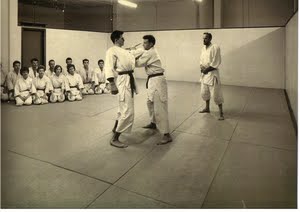
That definition, it has to be said, is a very broad and vague definition of blocking techniques. It is broad and vague by necessity given certain ambiguity surrounding blocking techniques. An ambiguity that only comes to light when the various conceptualisations of blocking techniques that are espoused by different martial arts are studied.
Moclair, in Jujutsu: A Comprehensive Guide, defines blocking techniques in terms of the use of an arm or arms to stop an attacker from striking a person with a blow from their hands, fists, knees or other parts of their body. Moclair’s definition explicitly, and with clarity, refers to the common and traditional conception of blocking techniques as being techniques that are used to stop an attacker from hitting or kicking a person.
In The Textbook of Modern Karate, Okazaki and Stricevic provide the following definition of blocking techniques: 'A block is a karate technique directed at a certain target – the opponent's hand, foot, leg or arm – for the purpose of arresting or deflecting his attack.' Okazaki and Stricevic’s definition informs us that blocking techniques are directed at the opponent's body part that is attempting to hit or kick the blocker. It also provides a description of how blocking techniques stop the opponent from hitting or kicking the blocker: by arresting or deflecting the attacking body part.
It should be noted that some martial arts or martial artists distinguish between blocking techniques and deflection or parrying. In this case, blocking techniques are isolated to those techniques that arrest an attack to avoid being hit or kicked. Deflection or parrying serve the same purpose but by a different means.
Blocking and Evasion
In Mastering Jiu-Jitsu, Gracie and Danaher distinguish between evasion and blocking to avoid being hit or kicked. Evasion does not involve contact with the opponent's attacking body part. Evasion can be basically subdivided into two types: those that involve moving the feet and those that involve moving just the upper body or head. Japanese martial arts refer to the former as taisabaki (body movement). Boxing teaches both methods with the former referred to as footwork and the latter bobbing and weaving.
If a body movement of any description is used in conjunction with a blocking (or deflection) technique, there are two questions that should always be asked. Firstly, was the body movement not sufficient to qualify as an evasion. Secondly, if the answer to the first question is affirmative, what was the purpose of the blocking technique. After all, the evasion took care of the problem of getting hit or kicked.
Blocking Possibilities
Nakayama, in the karate classic Dynamic Karate, suggests that, while blocking, you must attempt to seize the initiate and turn the opponent's attack to your advantage. He provides six methods that he suggests illustrates the various possibilities in blocking:
1. Block the opponent's arm or leg with sufficient force to discourage further attack. In a sense, this kind of block can be called an attack.
Nakayama does not define block. If we assume it involves a technique that is designed to avoid being hit or kicked, then this type of block serves two purposes. Firstly, to avoid being hit or kicked, and secondly, to apply sufficient force to cause pain and/or injury. If the block is used in conjunction with an evasive movement then it only serves the latter purpose. This is a possible answer to the question posed above.
2. Block the opponent's attack with only enough force to parry or deflect it. This
would be termed a light block in #1.
A deflection or parry changes the direction of the attack. If an evasive movement is used to avoid being hit or kicked there is no need to change the direction of the attack. If the attack is deflected in these circumstances, the question has to be asked and answered, why?
A 'brushing block' refers to a technique where the attack is brushed past the defender with no change in direction of the attack. This implies an evasive movement was used to avoid being hit or kicked. The question has to be asked as to the purpose of the brushing block.
3. Block and attack. Block the opponent's attack and immediately counter-attack. It is also possible to block and counterattack at the same instant.
Nakayama's solitary example of blocking and counterattacking at the same instant is unconvincing. The pencak silat I studied contained wonderful examples of the use of this strategy. However, it also contained wonderful examples of the use of brushing blocks in conjunction with evasive movements. Each brushing block now bears investigation as to purpose.
4. Unbalance the opponent with your block.
Jan de Jong jujutsu makes extensive use of taisabaki to avoid being hit or kicked, as well as to reposition to attack. It also makes use of blocking techniques which is explained by their use to unbalance the opponent.
The unbalancing is physical and 'mental.' The physical unbalancing involves applying forces to cause the opponent's centre of gravity to be located outside of their base of support. The 'mental unbalancing' involves applying forces that do not physically unbalance an opponent but stuns, causes sudden loss of motion, or pain. In this way, they are similar to Nakayama's blocking possibility #1.
5. Block the opponent's attack as it is about to begin. To do this you must anticipate his attack.
6. Block and then retreat to a safe position until a chance to counter presents itself.
Blocking possibility #5 is the very definition of seizing the initiative, whereas blocking possibility #6 is not so much.
Direct and Indirect Blocks
In two books dedicated to the mechanics of martial arts, Starr distinguishes between direct and indirect blocks. Direct blocks are described as being applied directly against the force of the opponent's attack. Starr suggests that this form of blocking often requires the blocker to be physically stronger than the opponent, and the risk of injury to the blocking body part is high if the opponent's attack is very powerful. Indirect blocks are described as being sometimes referred to as deflections. Starr suggests that because indirect blocks do not directly oppose the opponent’s attacking force, they require very little strength to apply and the risk of injury is minimised. Starr is correct, in so far as it goes.
Starr's examples of indirect blocks includes the standard karate, high, middle and low blocks. These blocks do not involve applying force directly against the force of the opponent's attack. They do not involve applying force in the opposite direction to the force of the opponent's attack. You will find that the vast majority of karate's blocking techniques are designed to apply force to the opponent's attacking limb at an angle to the force of the opponent's attack. They apply a force to an attacking body part at an angle which results in a deflection rather than the attack being arrested.
This is a common misconception, that and traditional blocks are designed to oppose force directly, espoused by many who attempt to extol the virtues of their soft blocking methods over hard blocking methods.
Given that deflections generally require less force than techniques designed to arrest an attack, why then do karate practice applying a great deal of force in their blocking methods. The answer's may lay in Nakayama's blocking possibilities #1 and #4.
Absorption Blocks
Gracie and Danaher refer to blocks absorbing the forces of the attacker's attacking body part. This is typical boxing style blocks, and can be seen in shin blocks etc. In this case, the blocking techniques are not so much designed to avoid getting hit or kicked as they are to manage what body parts are hit or kicked.
Karate style blocking techniques do not tend to absorb the force of the attacker's attacking body part as they are designed to apply forces to an opponent's attacking body part.
Forces
Forces cause all bodies and objects to change direction or shape. Forces applied in different ways result in different outcomes. Even when the points of contact between two bodies (defender and attacker) are similar, the direction and magnitude of the force can produce a different outcome. It is important for the martial artists to understand specifically what they are trying to achieve, and why they are trying to achieve that, in order to better understand how the forces are to be applied to achieve that outcome.
*************
PS: Dear Reader
Okazaki and Stricevic make the following statement when discussing the forces involved in blocking techniques: 'The amount of force necessary to deflect an object is generally less than the force needed to initiate its motion.'
I am having some difficulty in supporting or correcting that statement in mechanical/physics terms. If any reader has mechanical or physics background and can help out in this regard, I'd be very grateful.
Thank you.
Tuesday, October 2, 2012
What connects the 2012 AFL grand final to Kodokan Judo to Kojutsukan?
How is the 2012 AFL grand final related to Jigoro Kano's Kodokan judo and Kojutsukan?
For the international readers of this blog, 'AFL' refers to the Australian Football League. Australian football is the most exciting football code in the world :).
Hawthorn (Hawks) and Sydney (Swans) battled out the 2012 AFL grand final on Saturday. The Hawks were favourites with a couple of out-and-out stars playing for them. The Swans were the underdogs with no stars of the same calibre as the Hawks. The Swans playing list was generally acknowledged as being inferior to the Hawks.
The Hawks won virtually every statistical category, and lost. The Swans lost virtually every statistical category, and won. This result can be explained as the triumph of systems thinking over analytical thinking.
Analysis is about breaking things down to understand them. Systems thinking is about synthesis, putting them back together, and understanding their interconnections. Analysis is about seeing the trees. Systems thinking is about seeing the trees and the forest.
Systems thinking is about understanding that everything is connected. The connections are what is important.
One of the fathers of systems thinking, Gregory Bateson, implored us to look for the 'patterns that connect.' Genius has been described as being able to see the patterns that connect things.
Jigoro Kano was frustrated that his jujutsu instructors simply taught a collection of techniques with no understanding of their relationship with one another. He sought the 'essence' of all jujutsu techniques. While he did not find the essence of jujutsu techniques that connected them together, he developed an essence which he applied to select jujutsu techniques to be included in his Kodokan judo. By default and design, Kano's essence is what connects all judo techniques.
Kojutsukan philosophy is all about understanding the patterns that connect. Not only the techniques taught by Kojutsukan, but techniques taught by all activities associated with preparing a person to survive a violent encounter and those used in violence generally.
Look for the patterns that connect.
For the international readers of this blog, 'AFL' refers to the Australian Football League. Australian football is the most exciting football code in the world :).
Hawthorn (Hawks) and Sydney (Swans) battled out the 2012 AFL grand final on Saturday. The Hawks were favourites with a couple of out-and-out stars playing for them. The Swans were the underdogs with no stars of the same calibre as the Hawks. The Swans playing list was generally acknowledged as being inferior to the Hawks.
The Hawks won virtually every statistical category, and lost. The Swans lost virtually every statistical category, and won. This result can be explained as the triumph of systems thinking over analytical thinking.
Analysis is about breaking things down to understand them. Systems thinking is about synthesis, putting them back together, and understanding their interconnections. Analysis is about seeing the trees. Systems thinking is about seeing the trees and the forest.
Systems thinking is about understanding that everything is connected. The connections are what is important.
One of the fathers of systems thinking, Gregory Bateson, implored us to look for the 'patterns that connect.' Genius has been described as being able to see the patterns that connect things.
Jigoro Kano was frustrated that his jujutsu instructors simply taught a collection of techniques with no understanding of their relationship with one another. He sought the 'essence' of all jujutsu techniques. While he did not find the essence of jujutsu techniques that connected them together, he developed an essence which he applied to select jujutsu techniques to be included in his Kodokan judo. By default and design, Kano's essence is what connects all judo techniques.
Kojutsukan philosophy is all about understanding the patterns that connect. Not only the techniques taught by Kojutsukan, but techniques taught by all activities associated with preparing a person to survive a violent encounter and those used in violence generally.
Look for the patterns that connect.
Subscribe to:
Posts (Atom)


